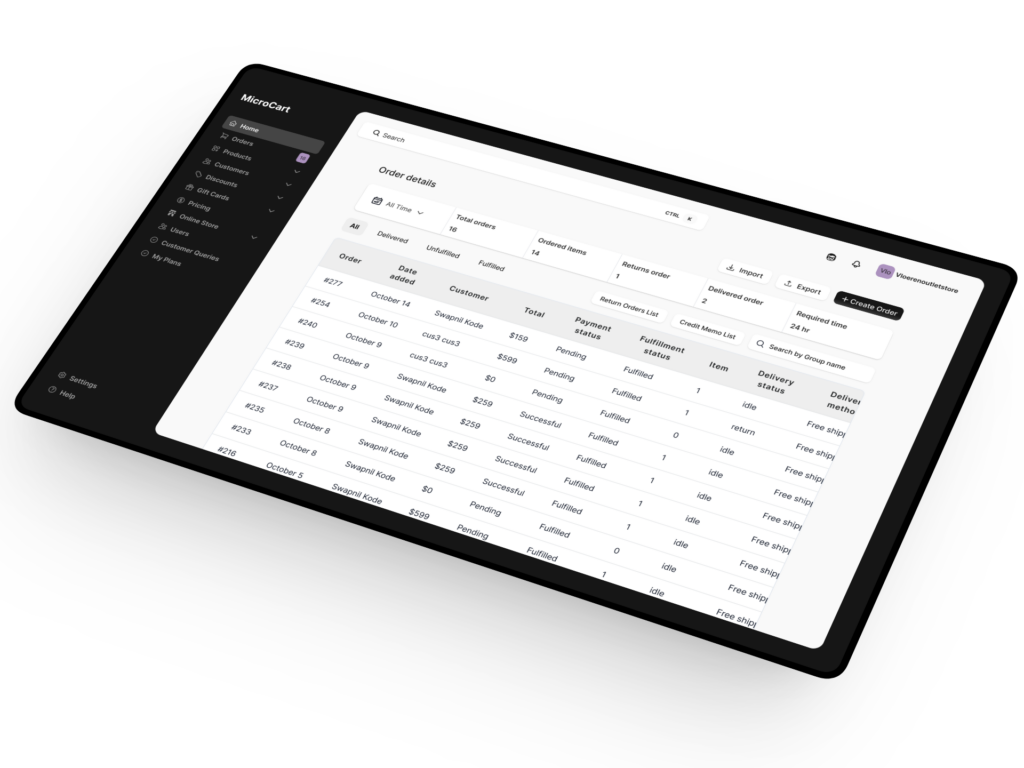
Why simplicity is the key to online success (and not ‘more features’)

In the world of e-commerce, it sometimes seems as if success equals complexity. More functions, more automations, more integrations, more possibilities. Starting entrepreneurs are overwhelmed with tools, dashboards, and “indispensable” features that promise to make their webshop more successful. The result is often the opposite of what they hope to achieve: confusion, delay, and doubt.
Simplicity might not sound spectacular. It doesn’t sell as well as promises of growth, scalability, and advanced systems. Yet, simplicity is precisely what sets most successful small webshops apart from the rest. Not because they are less ambitious, but because they understand where true success comes from in the initial phase.
More options don’t automatically make you more successful
When you start a webshop, it feels logical to prepare yourself as thoroughly as possible. You don’t want to forget anything. You want to be flexible. You want to be ready for anything that might come. That’s why many starters choose extensive systems with endless possibilities, even if they don’t need them yet.
But every extra option demands some of your attention. Every setting is a decision. And every decision costs energy. Before you know it, you’re spending more time managing your webshop than growing it.
Successful entrepreneurs understand that not everything that’s possible is also necessary. They consciously choose solutions that do what they need now, and not what might become useful someday. This allows them to maintain an overview and stay agile.
Simplicity forces focus
Simplicity doesn’t mean omitting things because you can’t handle them. It means consciously choosing where to direct your attention. And attention is perhaps your most valuable asset as an entrepreneur.
When your webshop is set up simply, you quickly see what works and what doesn’t. You understand where customers drop off, which products are selling well, and where questions arise. Complexity often masks problems, while simplicity makes them visible.
That visibility is not a disadvantage. It’s exactly what you need to improve. By focusing on the core of your webshop, namely your product and your customer, you build a foundation that is much stronger than any feature package.
Customers don’t want features, they want clarity
From an entrepreneurial perspective, features are interesting. From a customer perspective, rarely. Customers visit your webshop not because you have many options, but because they want to buy something. They want to understand what you offer, why it’s relevant to them, and how they can order it without hassle.
Every extra step, every unclear choice, and every distraction increases the chance of someone dropping off. Simple webshops feel calmer. They inspire confidence because everything feels logical. That confidence directly translates into higher conversion, even without aggressive marketing.
Small webshops, in particular, have an advantage here. They don’t have to be everything to everyone. They can choose clarity and personality, instead of size and complexity.
Entrepreneurship becomes lighter when systems cooperate
An underestimated effect of simplicity is mental peace. Entrepreneurship is challenging enough. If your systems are complex, a feeling of falling behind quickly creeps in. The idea that you don’t quite understand something, that you’re setting something up incorrectly, or that you’re overlooking something.
Simple systems inspire confidence. You know where to look. You understand what’s happening. That creates space to be an entrepreneur instead of a problem-solver. And that space is essential to remain creative and make strategic choices.
Many starters quit not because their idea is bad, but because entrepreneurship feels too heavy. Simplicity lowers that barrier and makes perseverance possible.
You don’t grow by arranging everything beforehand
A common thought is that your webshop must be “ready” for growth before you start. As if you first need to build a solid foundation before you can receive customers. In reality, a webshop grows precisely through use.
You learn what customers need by working with them. You discover which functions add value and which are superfluous. By starting small, you make choices based on experience instead of assumptions.
Large companies need complex systems because their processes are complex. Starters don’t. And that’s not a shortcoming, but an advantage. You can switch quickly, adapt, and improve without every change becoming a major project.
Simplicity is not a lack of ambition
Sometimes choosing simplicity feels like choosing less. As if you’re shortchanging yourself or lowering your ambitions. But simplicity isn’t about thinking small; it’s about thinking sharply.
Entrepreneurs who consciously choose simplicity often do so because they want to invest their energy where it yields the most. They know that growth doesn’t come from doing everything at once, but from doing the right things well.
By embracing simplicity in your webshop, you give yourself the space to grow in a way that suits you. Step by step, with clarity and confidence. That’s not a limitation; that’s strategy.
What truly matters in the initial phase
In the initial phase of a webshop, only a few things truly matter. That your product is clear. That customers can trust you. That the ordering process runs smoothly. And that you understand what’s happening in your webshop.
Everything that doesn’t directly contribute to that can come later. Not because it’s unimportant, but because timing is everything. Optimizing too early often feels productive but rarely leads to results.
Simplicity helps you respect that timing. To grow based on real needs, not on hypothetical scenarios.
Success often feels simpler than you think
If you look at small webshops that are doing well, one thing often stands out: it feels logical. Not overwhelming, not complicated, not flashy. Just clear. That feeling doesn’t happen by chance. It’s the result of choices focused on simplicity and focus.
Success in e-commerce rarely lies in having more than others. It lies in making better use of what you have. In knowing what’s important and daring to let the rest go.
Simplicity is not an endpoint, but a starting point. It paves the way for growth, instead of blocking it. And especially for starters and small entrepreneurs, that might be the biggest key to online success.